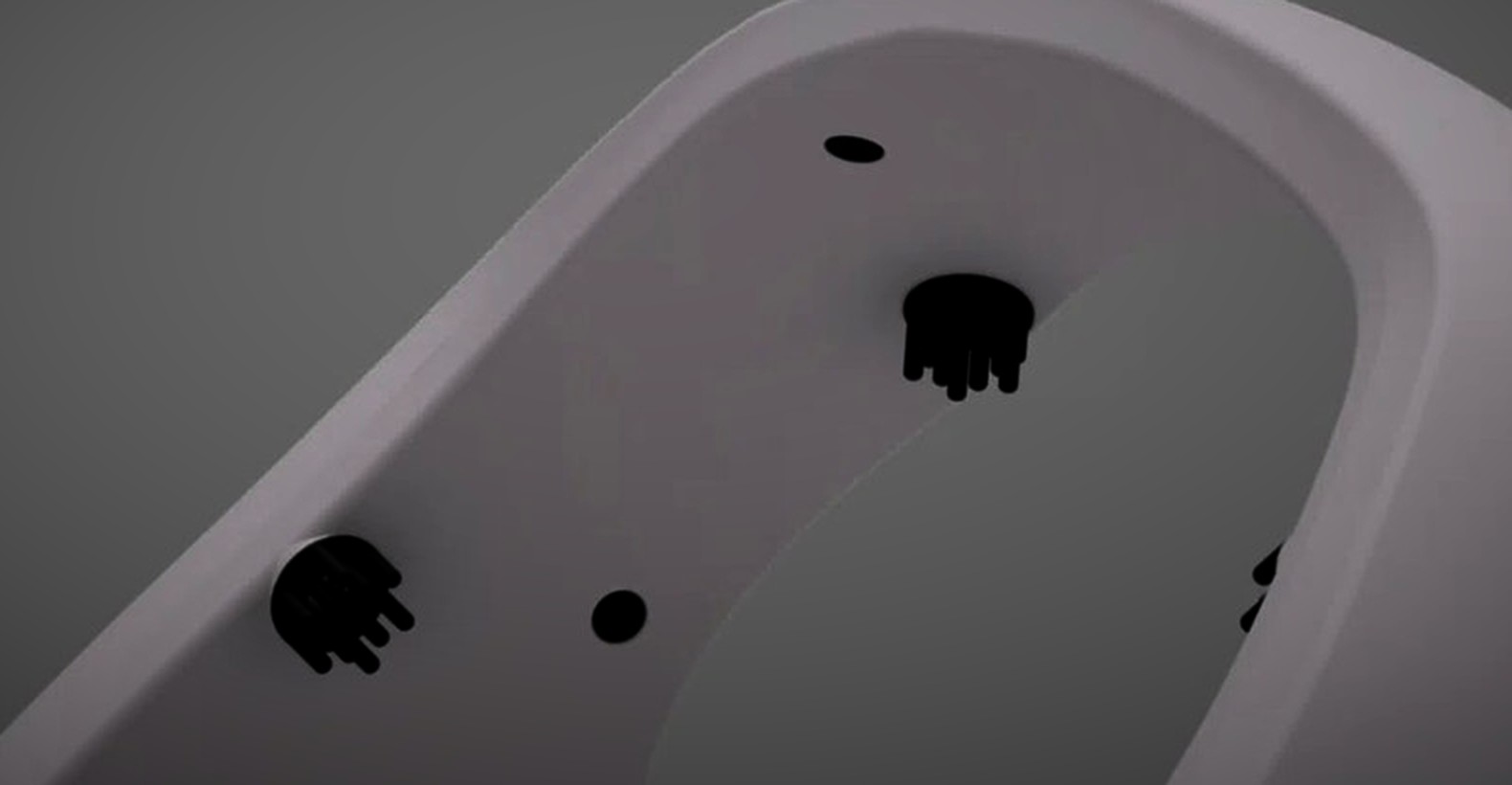
The electrode finds its own pressure.
Eight dry active contacts sit in a self-adjusting arm that follows the skull, each pre-amplified five times before the signal travels anywhere. Contact stops depending on how carefully someone put it on.
Research kit · BROADMIND
Eight dry-electrode EEG channels at 250 Hz, with 0.16 µVrms of input-referred noise — and an SDK that stays out of the way.
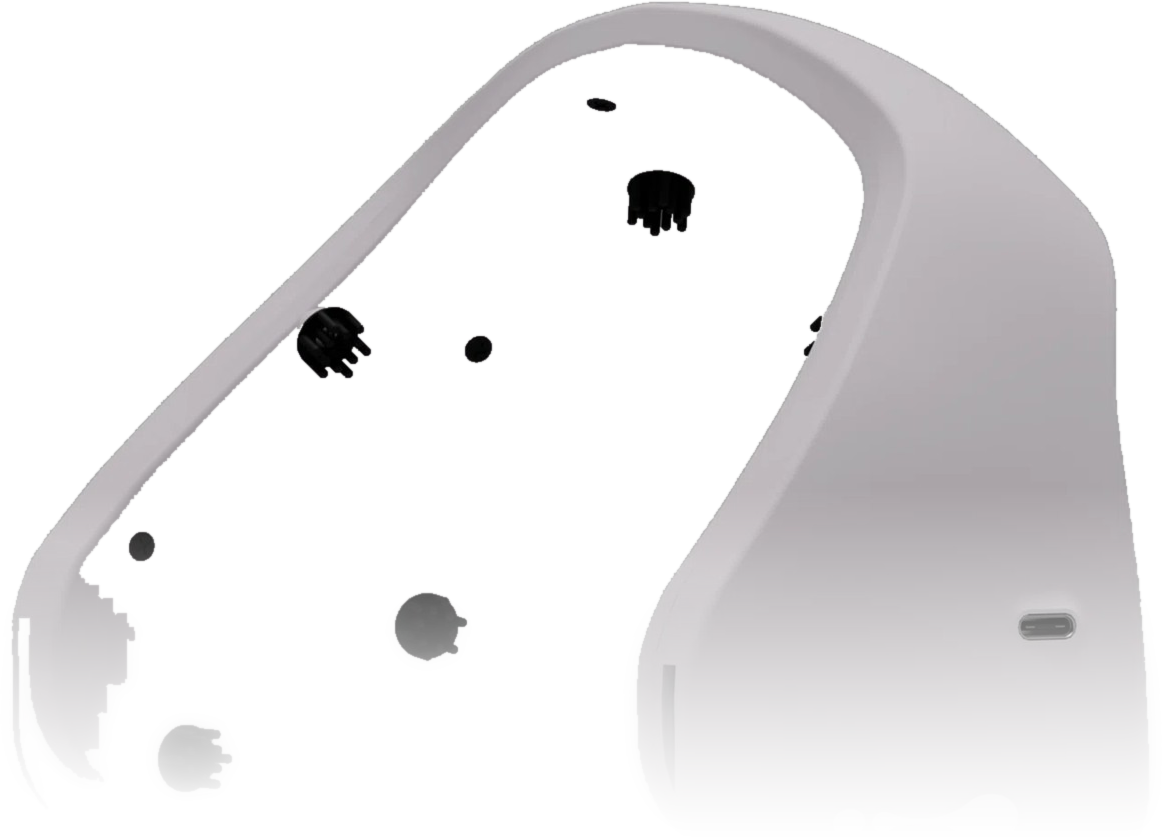
Contact without gel. No paste, no prep, no technician — put it on and it settles.
Every sample at full rate, unprocessed, streamed to your machine as you record.
C++, Python, MATLAB, R, Julia, Java, C# and Rust, on an open-source core. The stack you already run.
Contacts are designed to be replaced one at a time, so a worn electrode never retires the kit.
Drag to explore →
Eight dry active contacts sit in a self-adjusting arm that follows the skull, each pre-amplified five times before the signal travels anywhere. Contact stops depending on how carefully someone put it on.
CP1, CP2, C3, C4, CP5, CP6, FT7 and FT8 — the sensorimotor set that motor-imagery work is built on. Cz is ground and CPz is DRL, so every recording is comparable with published work.
Band power, artefact labels and raw streams in one window. Export CSV, EDF or JSON — or take the arrays straight into your own pipeline.
Full Kit figures as published by BROADMIND: 8 dry active electrodes, 0.02–125 Hz bandwidth, USB-C or magnetic 360 connector, Bluetooth LE, one shell that self-adjusts from S to XL. The Starter Kit uses passive electrodes and is specified at 0.8 µVrms noise floor.
The 10–20 montage exists so recordings can be compared. BROADMIND keeps eight positions across the band and refuses to hide the rest.
Delta through gamma is computed on device or on your machine — your choice, because the untouched stream is always one call away.
Blinks and jaw clench are marked in the stream. Nothing is silently removed.
CSV, EDF and JSON out of the box, so a recording made here loads in EEGLAB, MNE or a spreadsheet.
Eight language bindings on an open-source core, so a recording made here loads in the tooling you already trust.
Recordings live on the device and on your machine. Nothing leaves unless you send it, and nothing you record is used to train a model.
The device writes over USB-C. There is no account required to record and no cloud in the path.
Your signal is not a training set. Aggregates are opt-in, anonymised and documented before they exist.
Both are one action, always available, and neither asks you to explain yourself.
Raw streams, an open SDK and a montage that matches published work — for prototyping BCIs without buying an amplifier.
Read the developer notesAggregated, privacy-first readings of focus and recovery across a cohort — piloted, never sold as a verdict on a person.
Talk about a pilotLearn what your attention and recovery actually look like across a week, instead of borrowing someone else's chart.
Join the first cohortJoin the first cohort and help shape the platform before it ships wide.